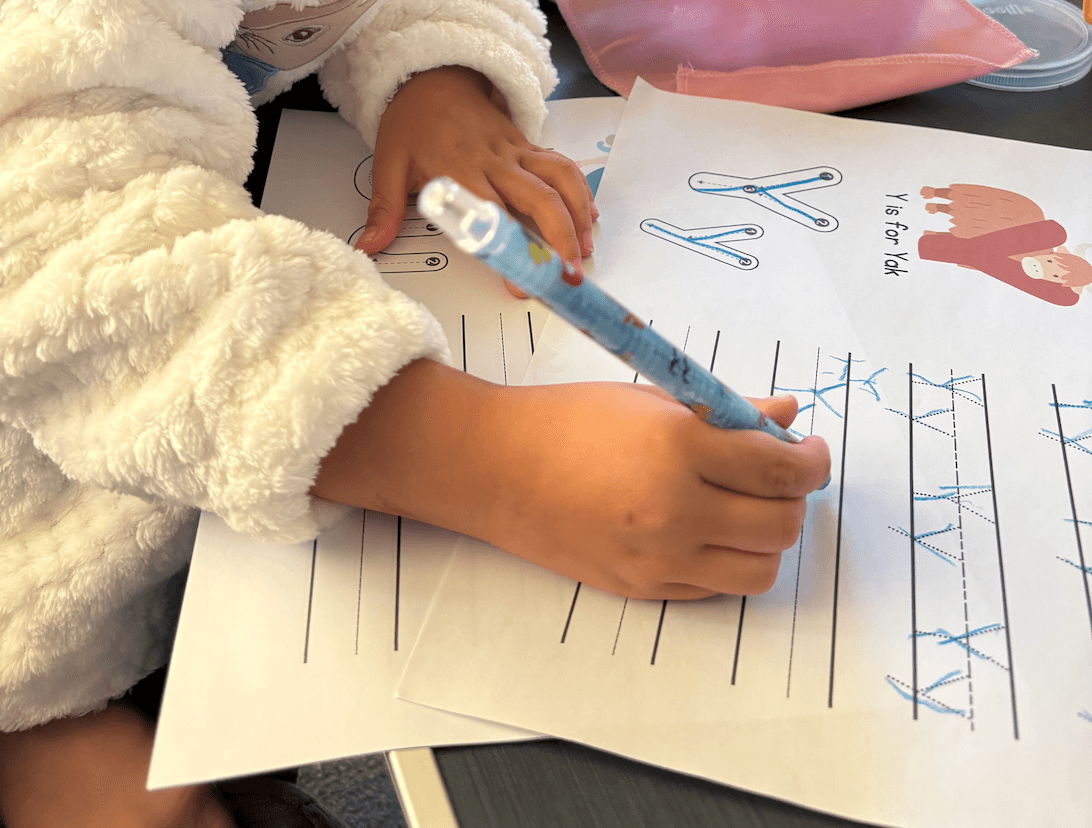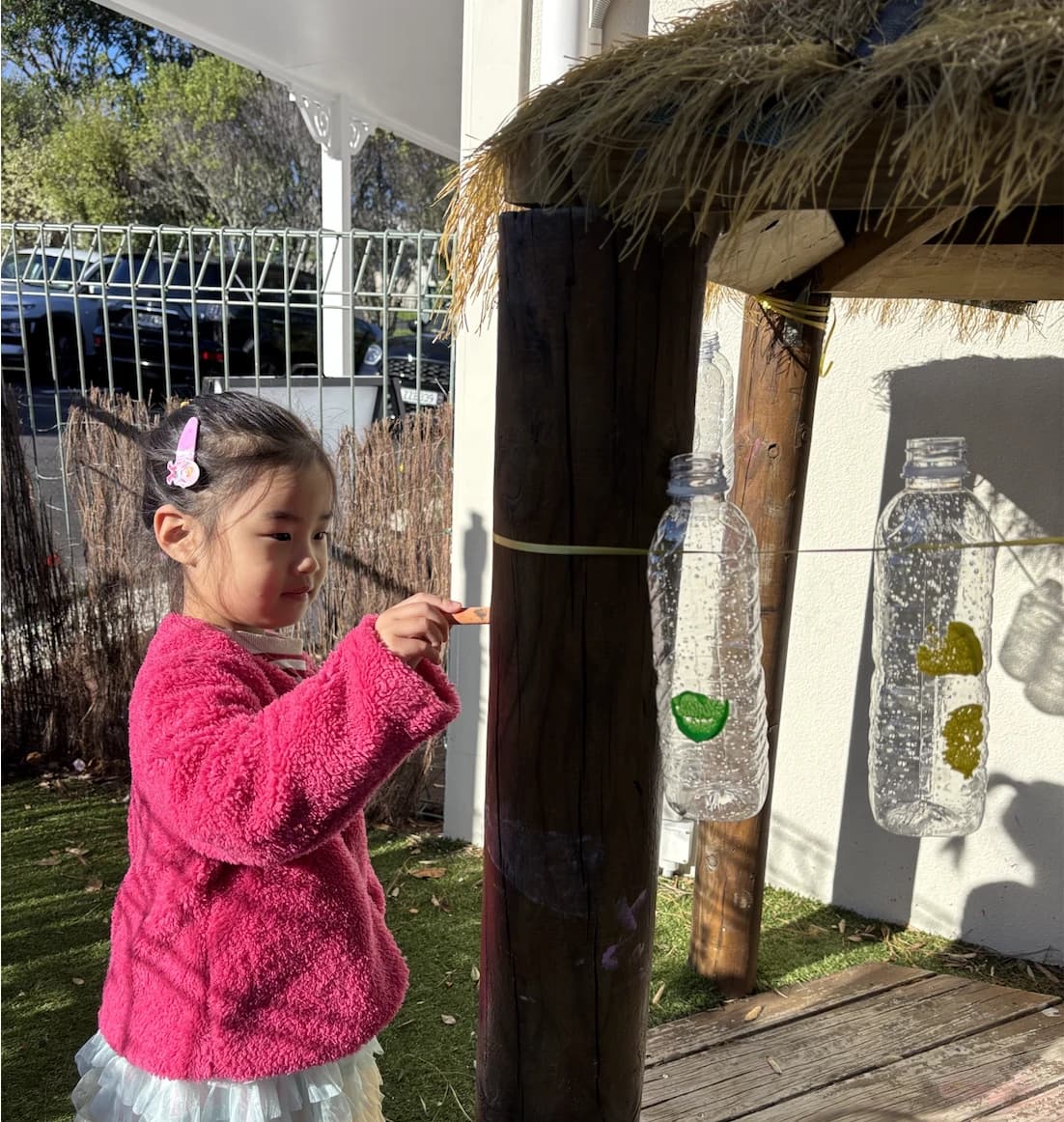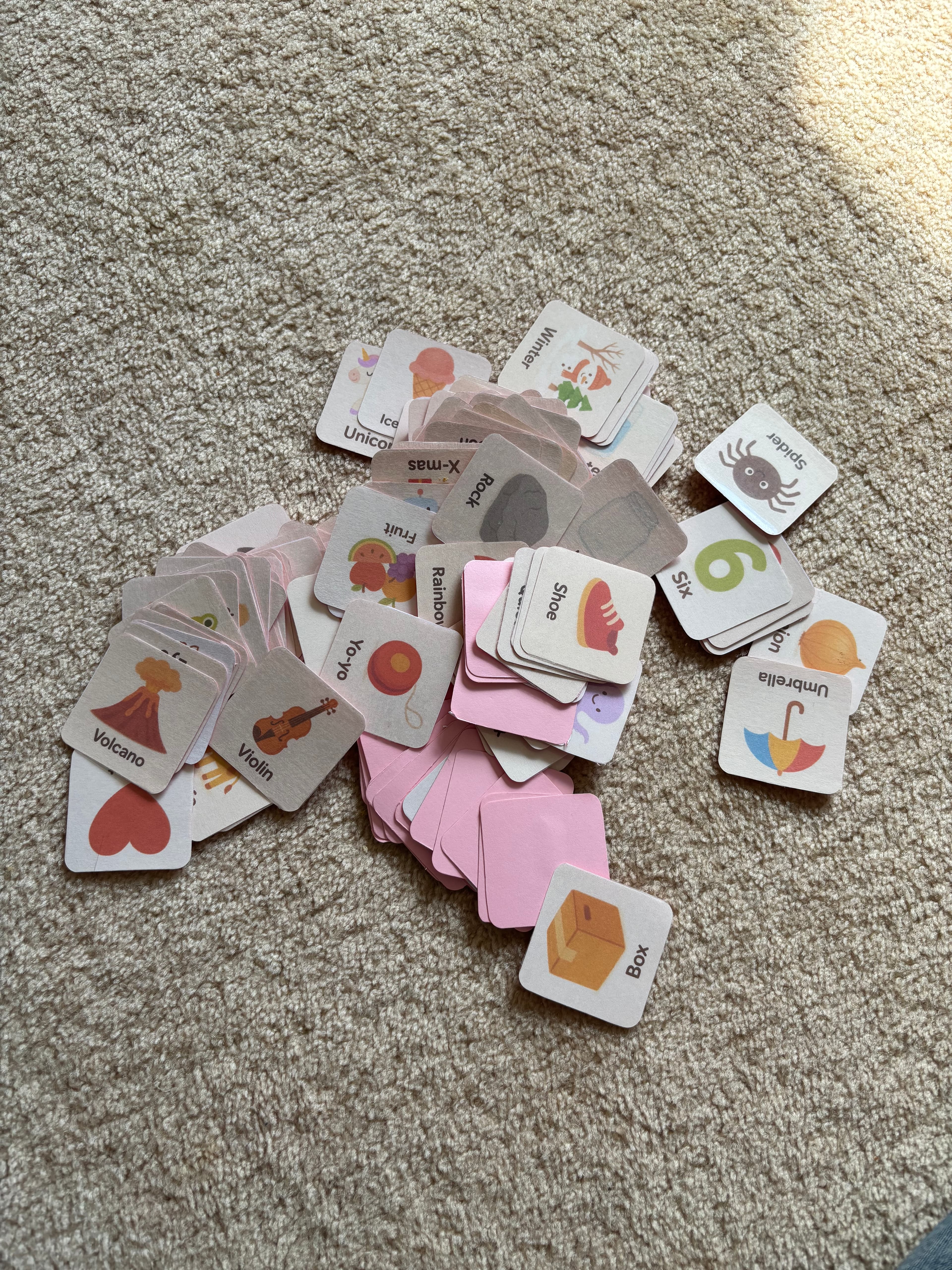
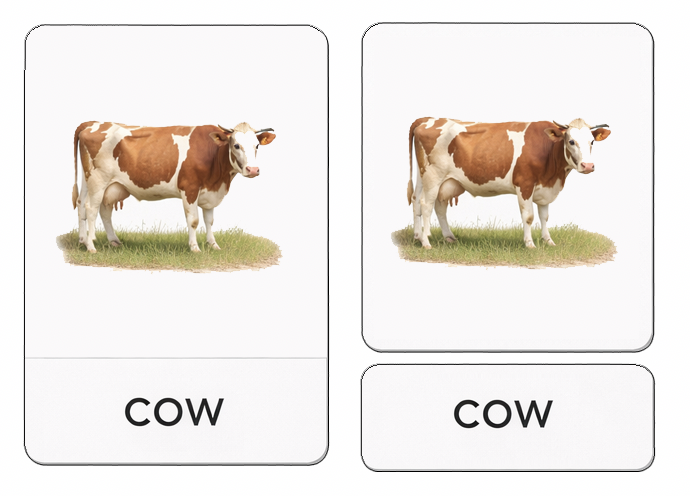
I made word cards. Simple ones — a picture on top, the word printed beneath. Nothing fancy.
At first we used them the way you'd expect. We'd go through them together, matching sounds to images, getting the words into her ears and her mouth. When she'd had enough of that, we'd spread them face-down and play memory games. Sometimes I'd lay a few out and ask her to sort them — animals here, food there, things you find outside. She didn't need to read a single letter. The pictures did the work.
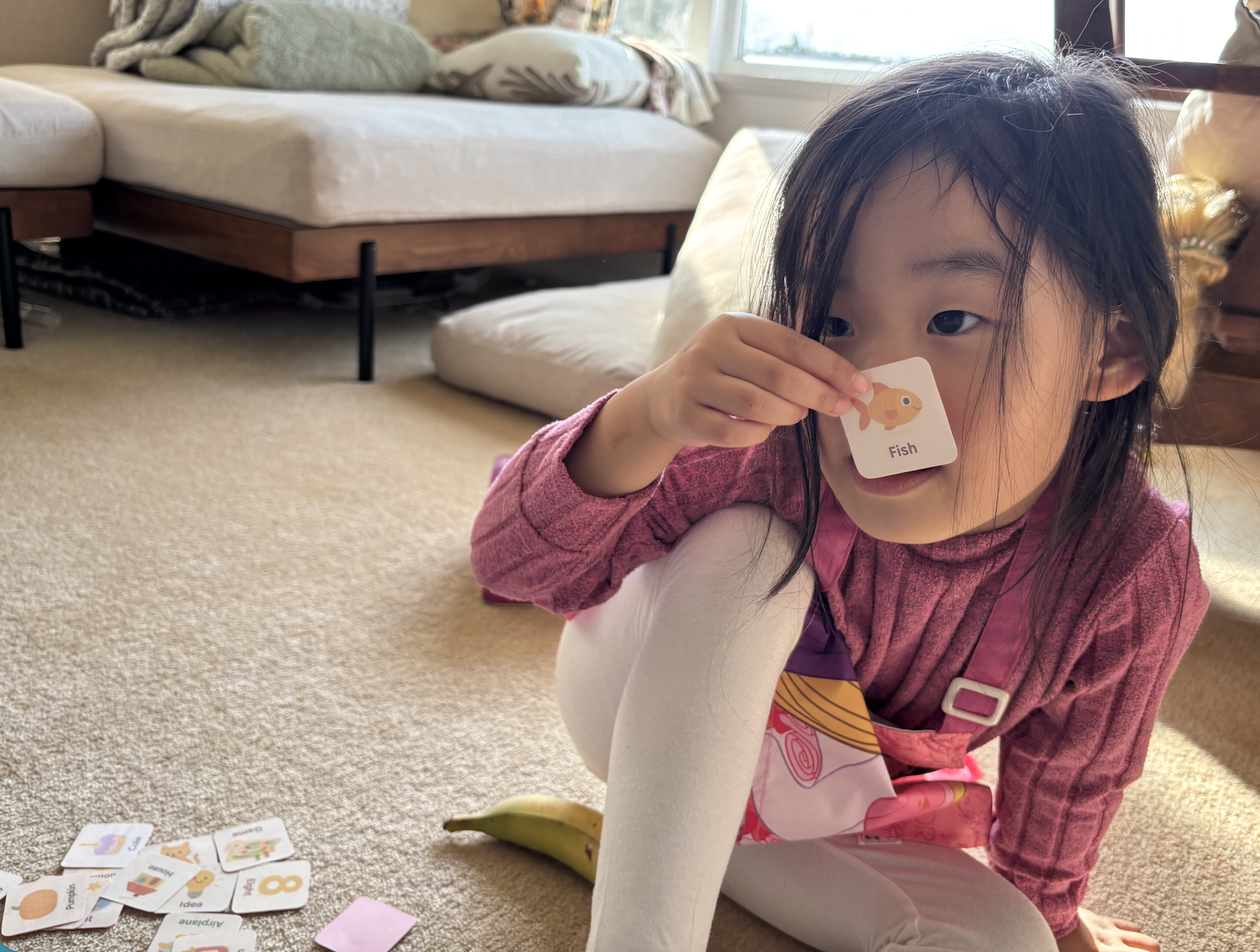
Jin picks up cards at random, or hunts for just the right one — and piece by piece, builds a story that's entirely her own.
Then one afternoon, something shifted.
She picked up a handful of cards on her own and started talking to me — not asking to learn, just... playing. She held up the princess card and said, in her mix of Korean and fledgling English, "Mummy, where are you?" Then she grabbed the queen card, held it up on my behalf, and answered herself: "엄마 여기 있단다" — I'm right here, darling.
She was making a story.
I didn't interrupt. I just played along, slipping in a simple English word here and there, nudging the plot gently when it seemed to stall. She didn't notice she was learning. She was too busy being the author.
Over the following days, the stories got longer. More cards joined the cast. The vocabulary she'd been drilling became characters, settings, plot twists. And every time a new word appeared in her story — one she'd learned just that week — something clicked in a way that no worksheet or app had quite managed.
That was the moment we started to see it clearly: the goal wasn't to get English into her. It was to give her something to do with it.
![[Little 15 Mins] The App We Wanted to Build](/_next/image?url=https%3A%2F%2Fvpayqdatpqajsmalpfmq.supabase.co%2Fstorage%2Fv1%2Fobject%2Fpublic%2Fimages%2Fblogs%2F1774085900957.png&w=3840&q=75)