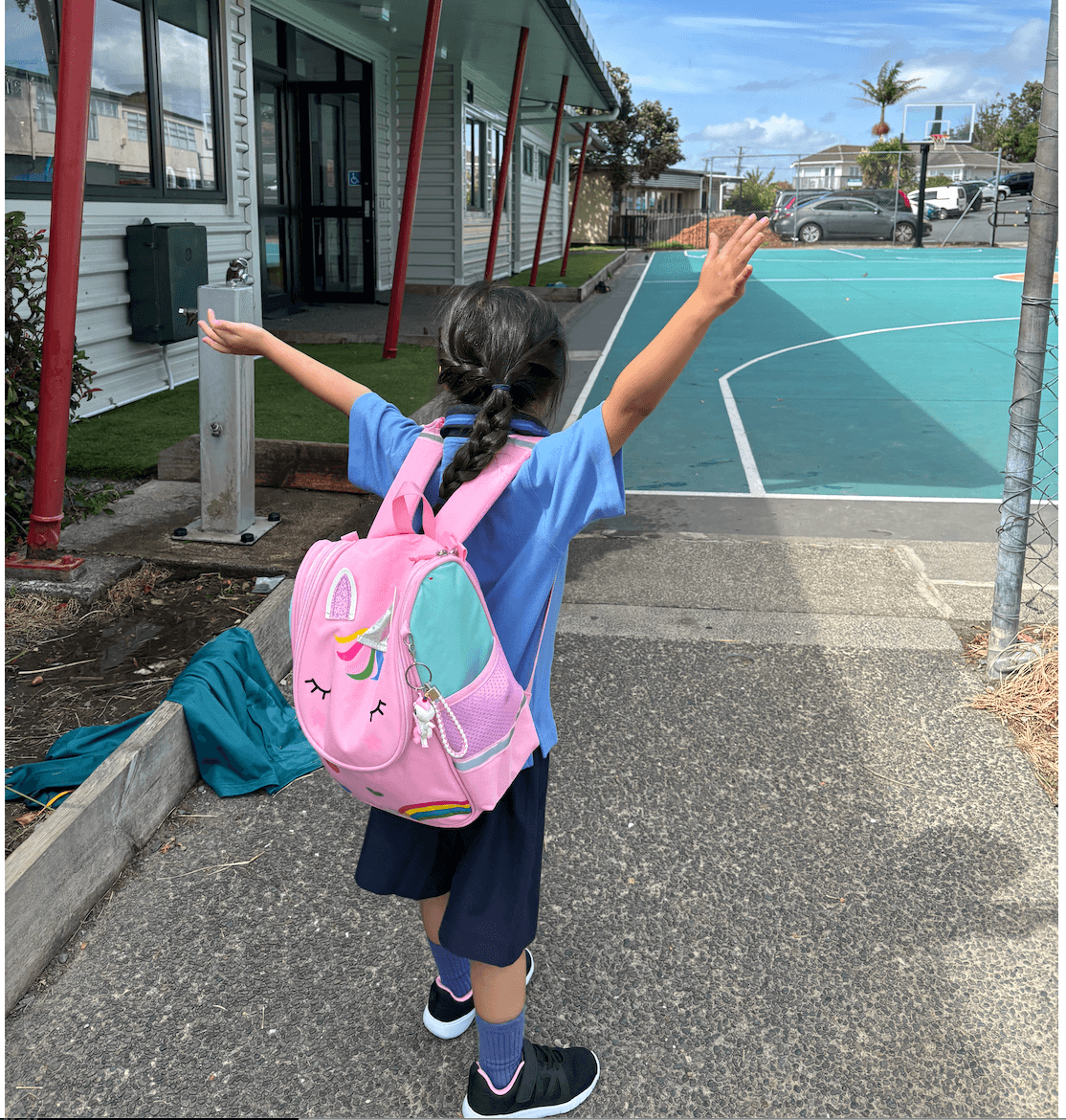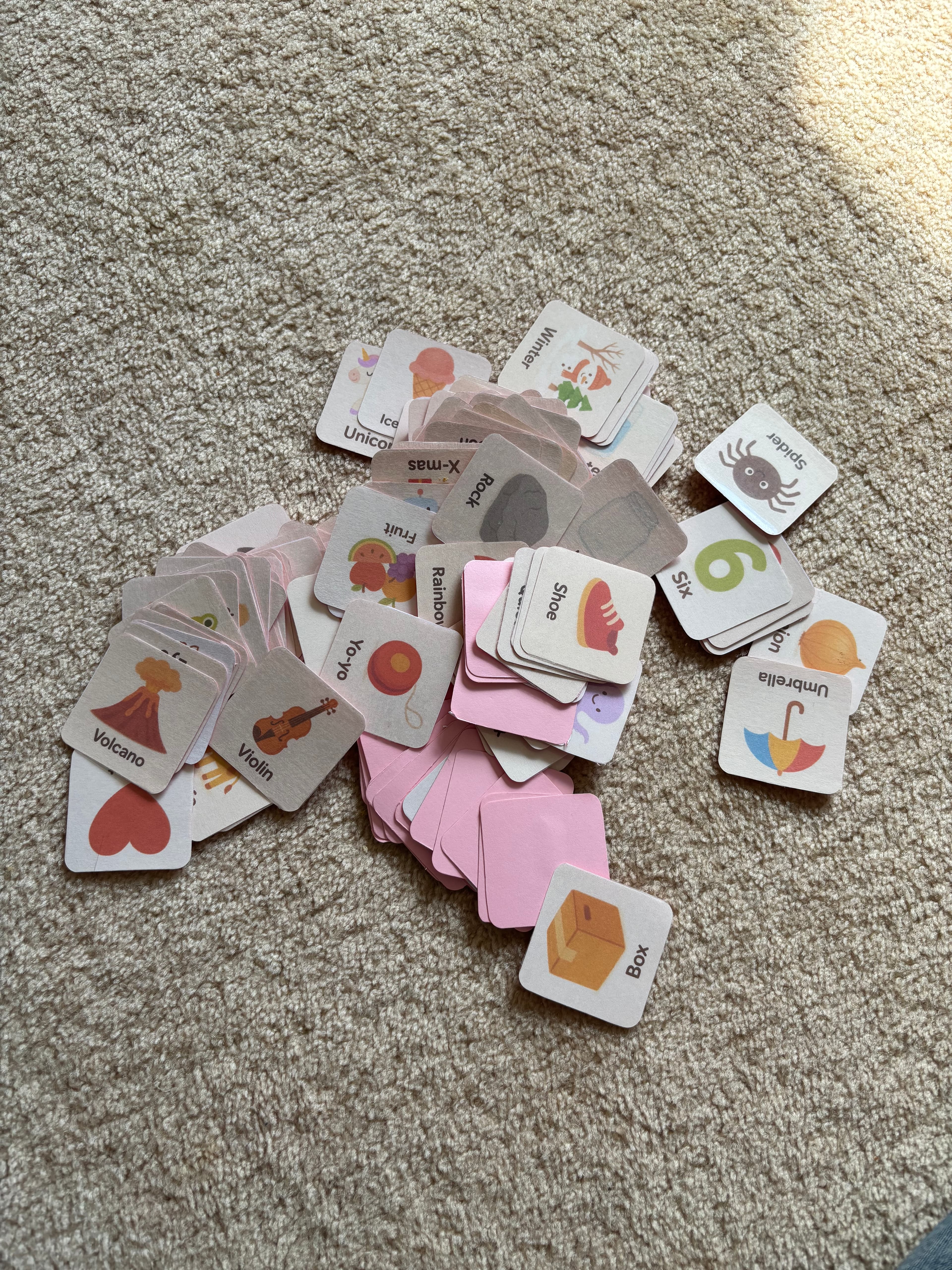
We didn't set out to build an app. We set out to spend a good few months with our daughter before school began — and somewhere in the middle of word cards and made-up stories about princesses and queens, we found ourselves asking: what if this could exist as something other families could use too?
We knew exactly what we didn't want. We'd seen what happened when screen time had no natural end point — the begging for one more level, the glazed eyes, the way the rest of the afternoon felt a little flatter. We didn't want to build something that pulled children in and didn't let go. We wanted something that did its job and then sent them back to the world.
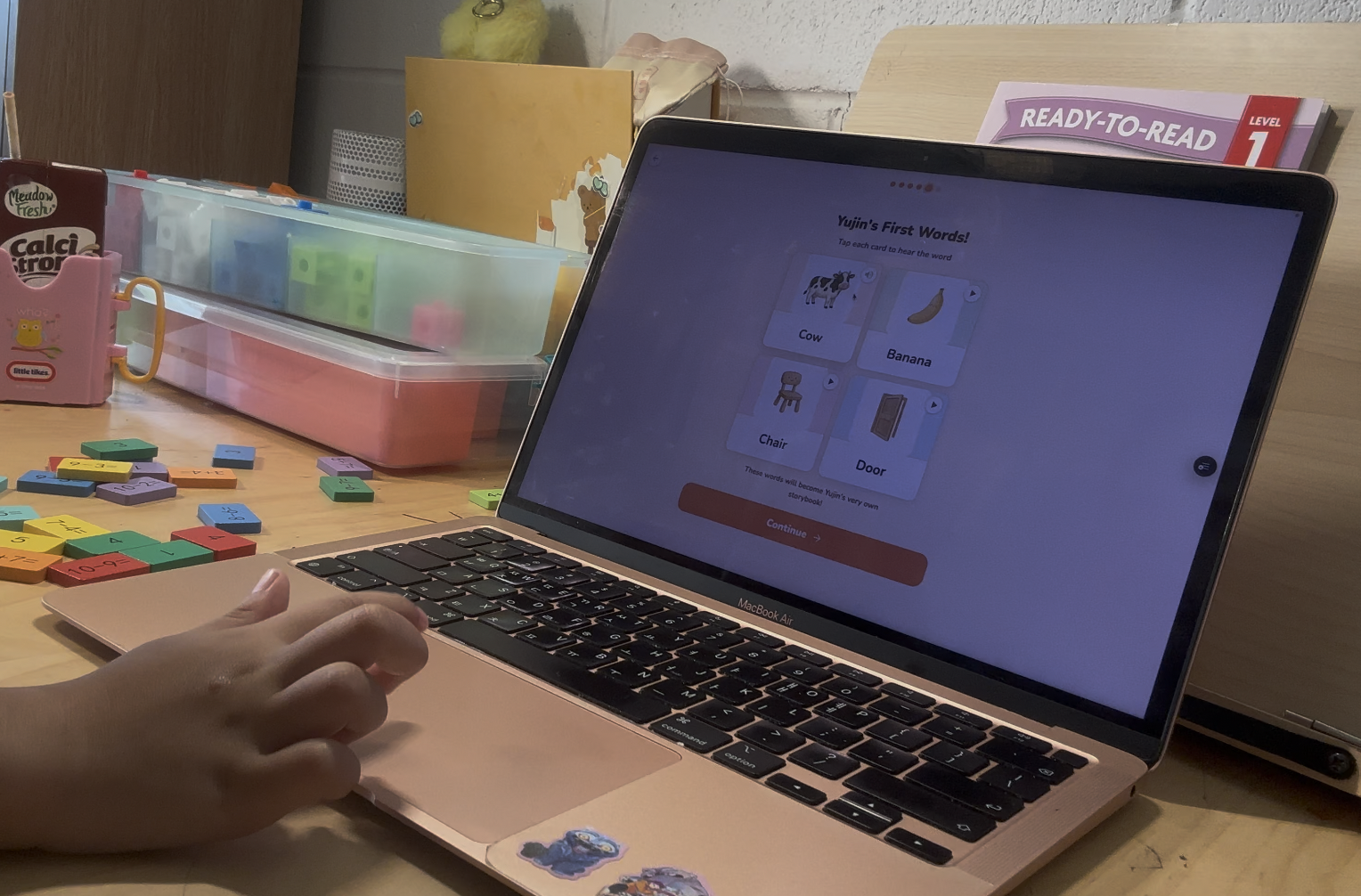
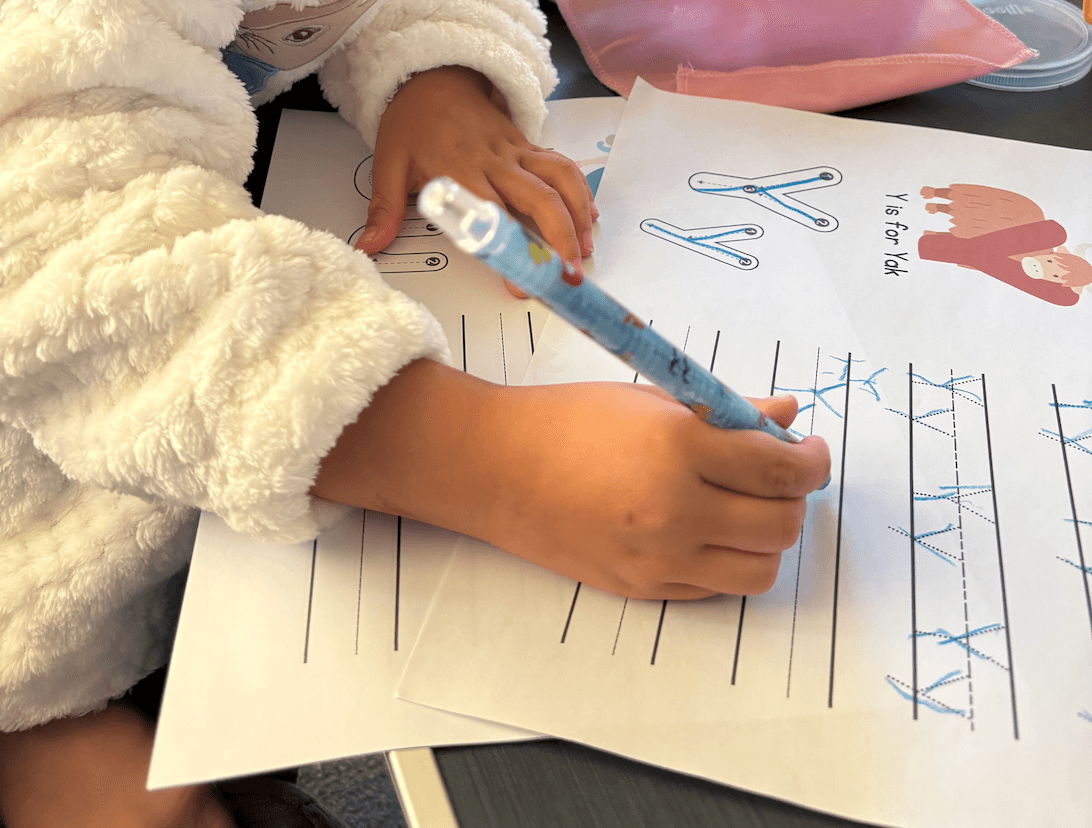
Little hands, busy with something new. She's learning words — but more than that, she's the one telling the story.
So we gave ourselves a limit: fifteen minutes a day. That's it.
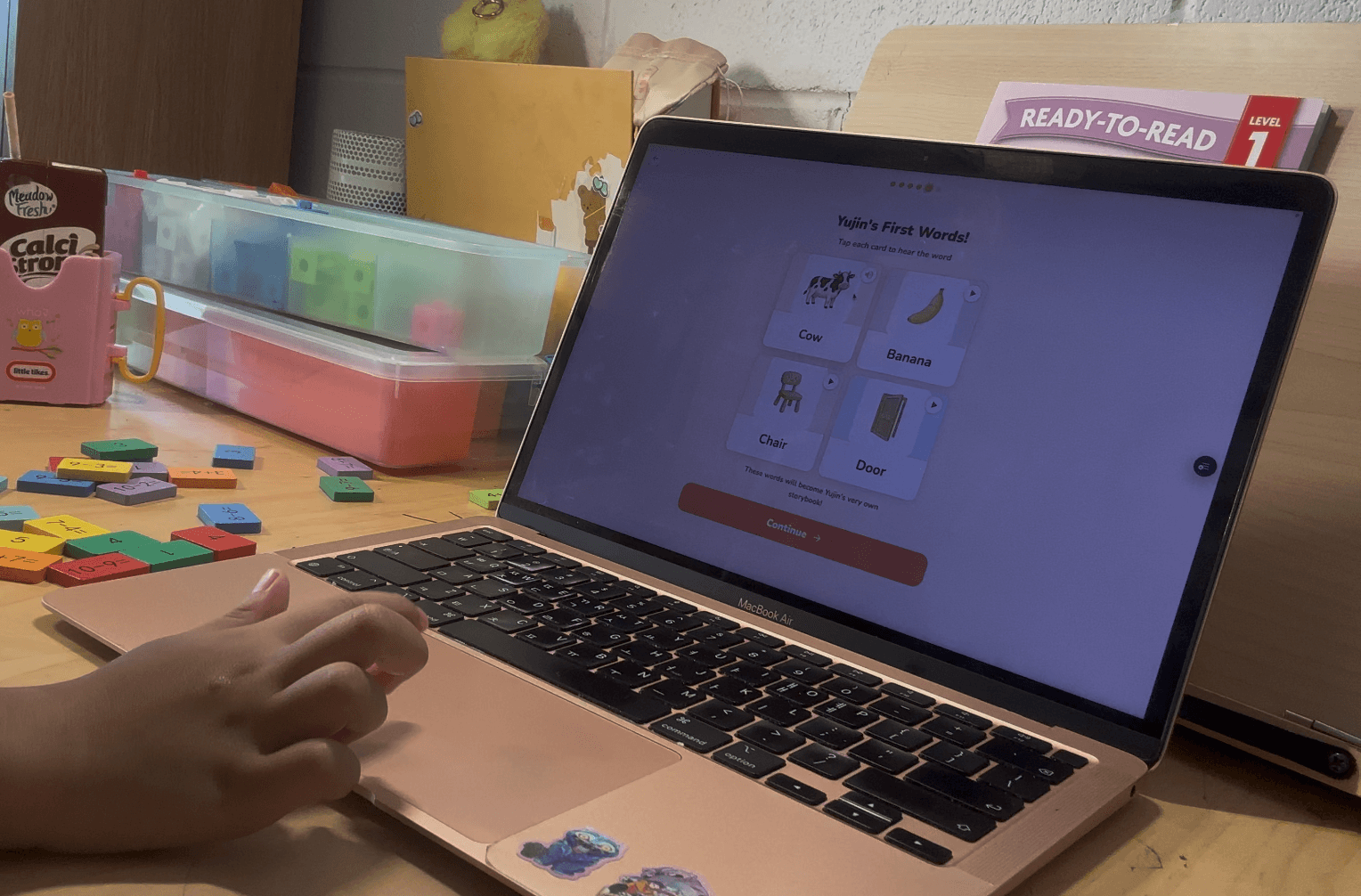
Each day, four new words. A bit of phonics, a memory game, a sound-match, a simple crossword — enough to make the learning stick without it feeling like study. And then, the part our daughter had shown us mattered most: a story.
Not a story we wrote for them. A story they help create. Children choose their genre, make decisions at key moments, and watch as the words they've just learned find their way into a narrative that's entirely their own. Every day, a new page. Every page, an illustration — ready to colour in, on screen or printed out. And when the story is complete, it becomes a book. A real one, that they made.
We thought about that afternoon with the princess card a lot while we were building this. The way she hadn't noticed she was learning because she was too busy telling a story. The way the words became hers the moment she put them to use.
At the end of each daily session, our character Jini waves goodbye and says: I wonder what happens next in your story — see you tomorrow! And then the app closes. What the child does with those four words for the rest of the day — what they dream, what they imagine, what they whisper to their toys — that part is up to them.