M begins intermediate school in just three weeks. Having completed our entire education in Korea, my husband and I know little about the schooling system here. Just as we were beginning to adapt to primary school, we now face a new stage—uncertain about how to guide our still-young child through this transition.
One of the most common things I've heard from other parents is that if students don't reach a certain level by Year 9, making academic progress becomes challenging. To navigate college successfully, they say, children need to work diligently through Years 7-8 to establish themselves in a stable position. This makes Years 7-8 at intermediate the most critical period for our child's academic journey in New Zealand—especially having just arrived in Year 6.
Every time I hear this, an inexplicable anxiety rises within me. Having brought a child who was thriving in a familiar language and system in Korea to this distant land, I feel the weight of responsibility to guide her well. It's not that I expect outstanding grades—rather, I worry about helping ensure her education doesn't become a barrier to her own future.
The best way to work through this uncertainty? Gathering information. I started by finding out what Year 7 students actually learn, going straight to the Ministry of Education website (https://newzealandcurriculum.tahurangi.education.govt.nz/). The new curriculum for 2026 had recently been released. English and Mathematics were finalized last year, while Science and Social Sciences were available in draft form. I downloaded the files, reviewed the overview, and printed the detailed curriculum sequences for each subject to study them closely.
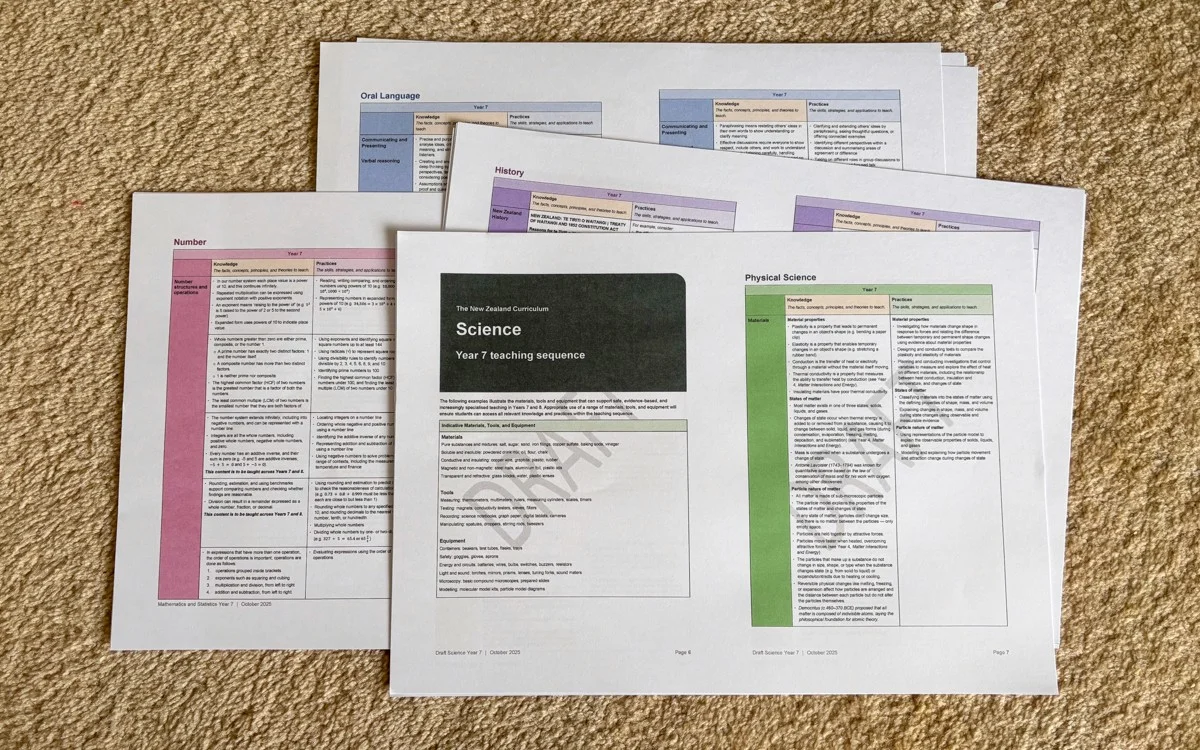
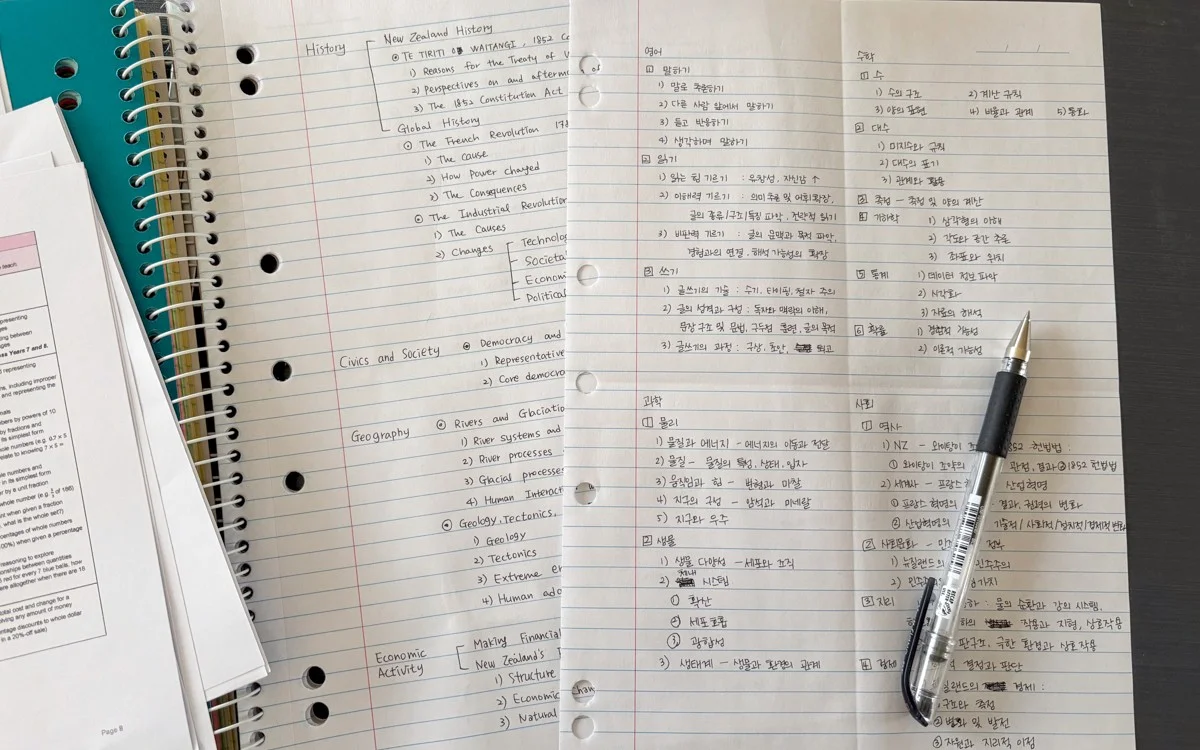
Unlike primary school, which focuses on building foundational literacy, comprehension, and learning habits, intermediate school marks the beginning of more substantive academic work. English divides into oral language, reading, and writing—requiring students to logically explain and argue their ideas to others. Mathematics branches into number and algebra, measurement, geometry, and statistics and probability. Science covers physical science and biological science, while social sciences encompasses history, civics and society, geography, and economic activity.
We've now been settled here for exactly one year. Each of us, in our own way, is navigating challenges and preparing for the year ahead. Even if we don't manage everything perfectly, I hope we can maintain our resolve. I'm simply doing what I can.