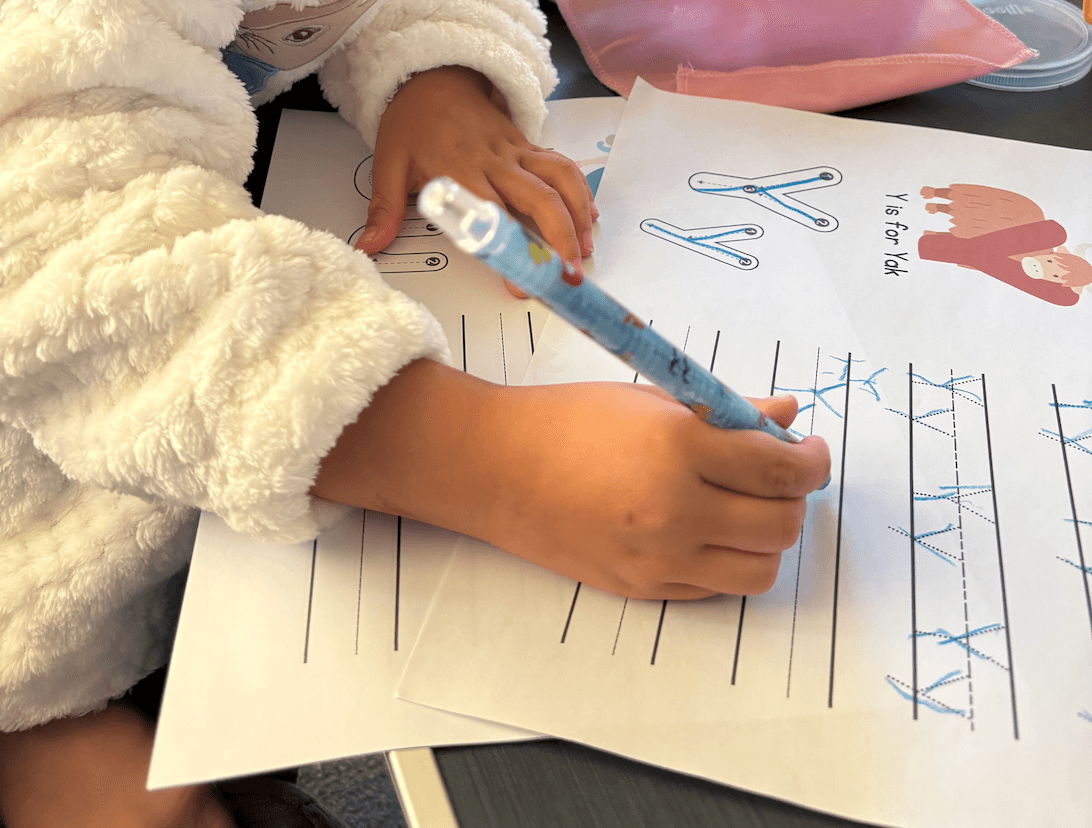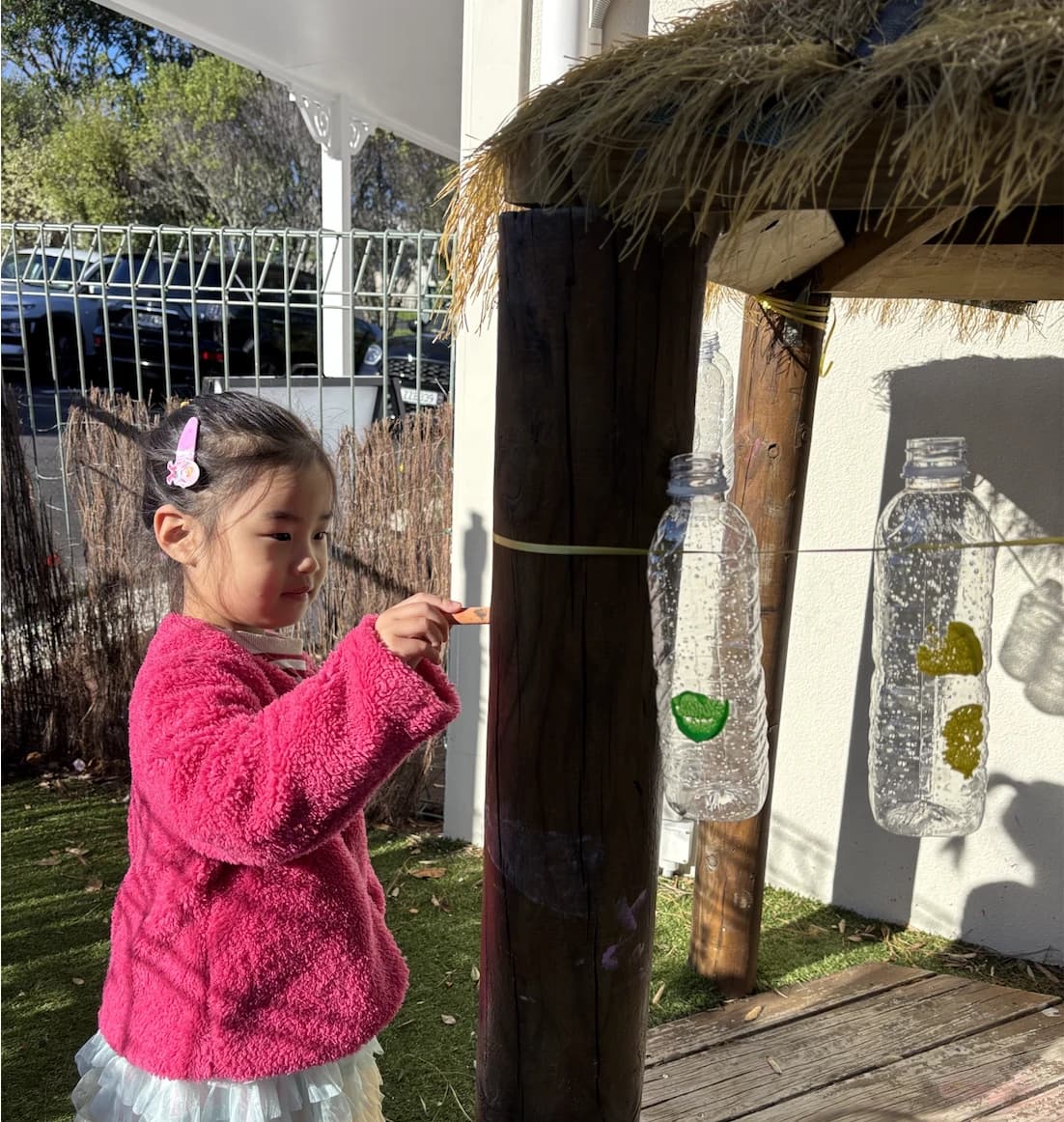
Before restarting home learning, we had to set up a routine that could run smoothly even when I'm not around. So I designed three different routines—tailored to each child's stage and what they need most right now.
Routine for M Year 7 Prep | Self-Directed Learning | College-Ready
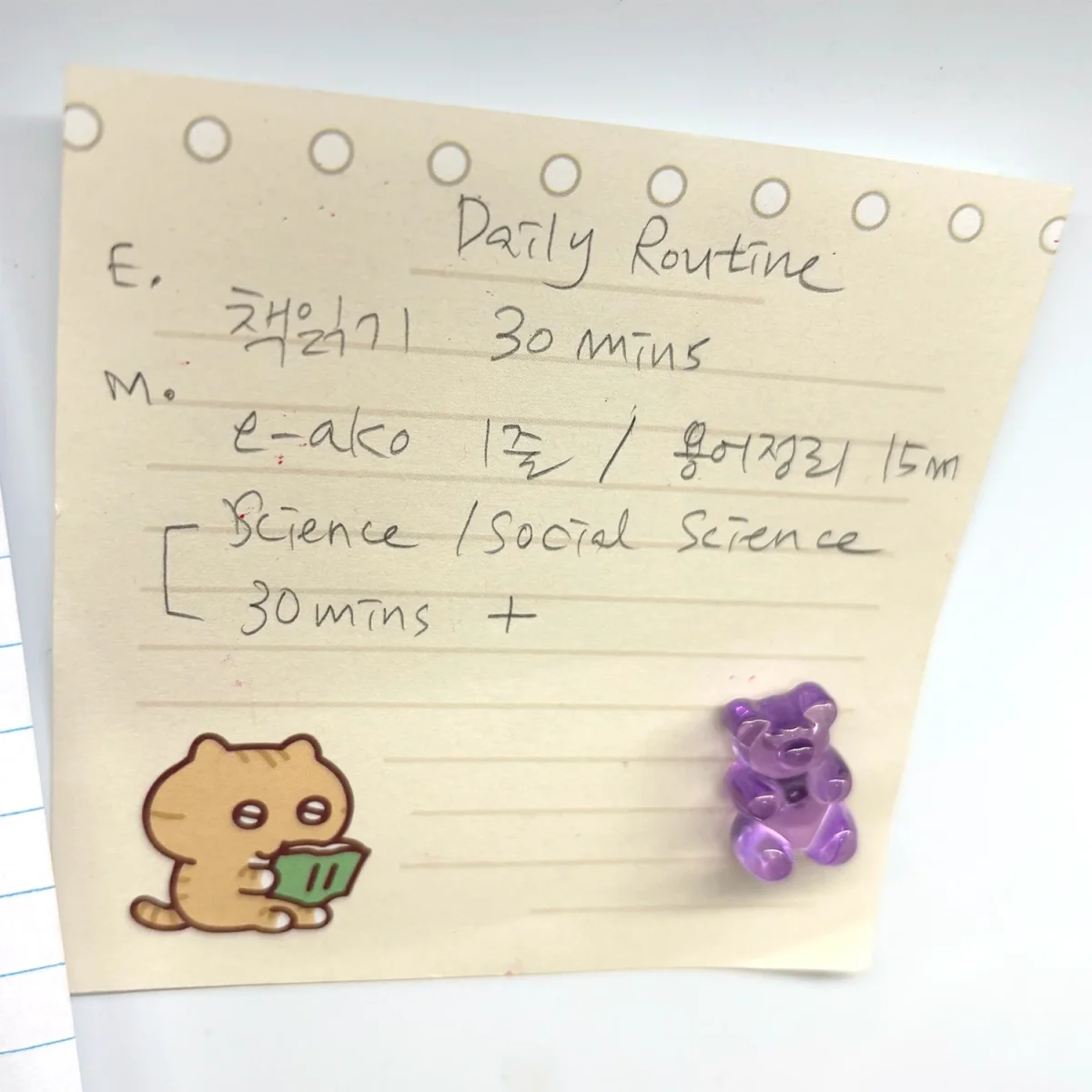
Primary education focuses on foundational literacy and numeracy. Secondary education shifts toward building and managing a broader knowledge system independently. Middle school is about learning how to explore, organize, and study on your own before diving deep. So I designed M's curriculum with that focus—especially for Science and Social Studies, where systematic learning methods matter most.
Daily Tasks
Maths | e-ako & Korean workbooks One course per day on e-ako (NZ Ministry of Education website). Each course has 20-30 questions that teach math principles step-by-step with depth. For school topics, M reviews using Korean workbooks—finding relevant sections as needed. When she struggles, I provide extra practice sheets or explanations. Part of this is translating math terminology from Korean to English.
Reading | Literature Year 7 requires one novel, various poems, and multiple non-fiction pieces throughout the year. To build stamina for longer texts, M is focusing on building fluency with her favorite series. During holidays, we'll choose recommended books to read through. School Journal (published by NZ Ministry of Education) provides plenty of exposure to poetry.
Self-Directed Learning Project This is the most important and meaningful part of M's setup. The goal is to develop non-fiction reading, information processing, speaking, and writing skills through Science and Social Studies curriculum topics. Each topic takes about 1.5 weeks, divided into three stages.
Routine for H Vocabulary Foundation | English Baseline | Primary Literacy
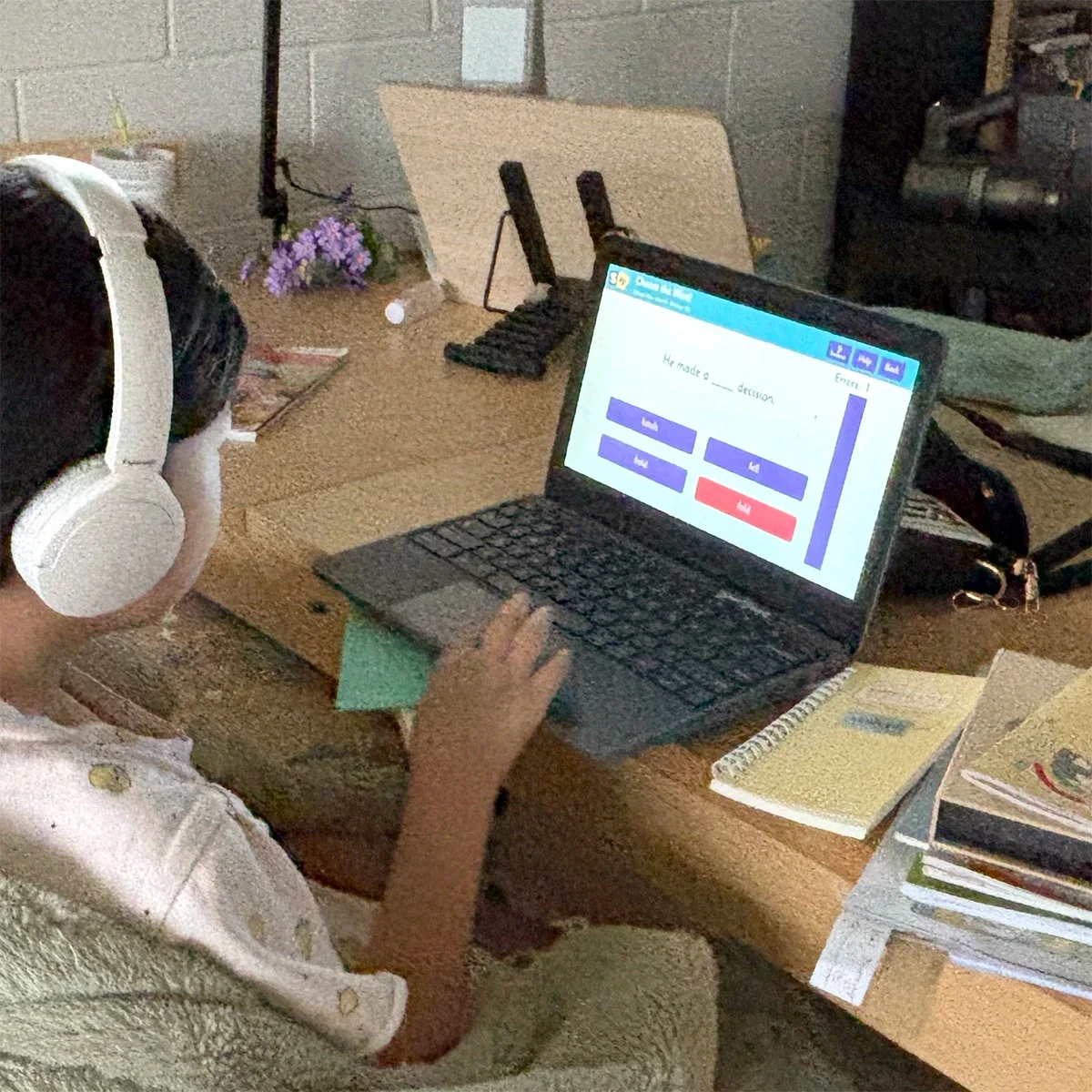
H finished only Grade 2 in Korea before enrolling as Year 5 here. Since it's the last year in Primary, H needs to establish a solid English foundation this year, or next year will be much harder. So H's curriculum focuses on improving English skills and building study habits through clear daily tasks.
Daily Tasks
Maths | e-ako & NZ workbooks Like M, H does one e-ako course per day. During holidays, we'll work through Year 5 and 6 NZ math workbooks I bought last year.
Vocabulary | stepsweb Continues 20 minutes of daily Stepsweb as she's been enjoying for a year.
Literacy | Sentence Structure Study Reading a storybook together with Mum, practicing direct translation and sentence patterns. We identify commonly used structures and create example sentences.
Grammar | Basic Workbook Primary Year 1-2 level English workbook for practicing simple sentence construction—aimed at reducing basic errors.
Reading | Daily reading One Level 2 readers book per day, recording titles in her reading journal. She looks up unfamiliar words on her own.
Routine for J Learning Habits | School Adaptation
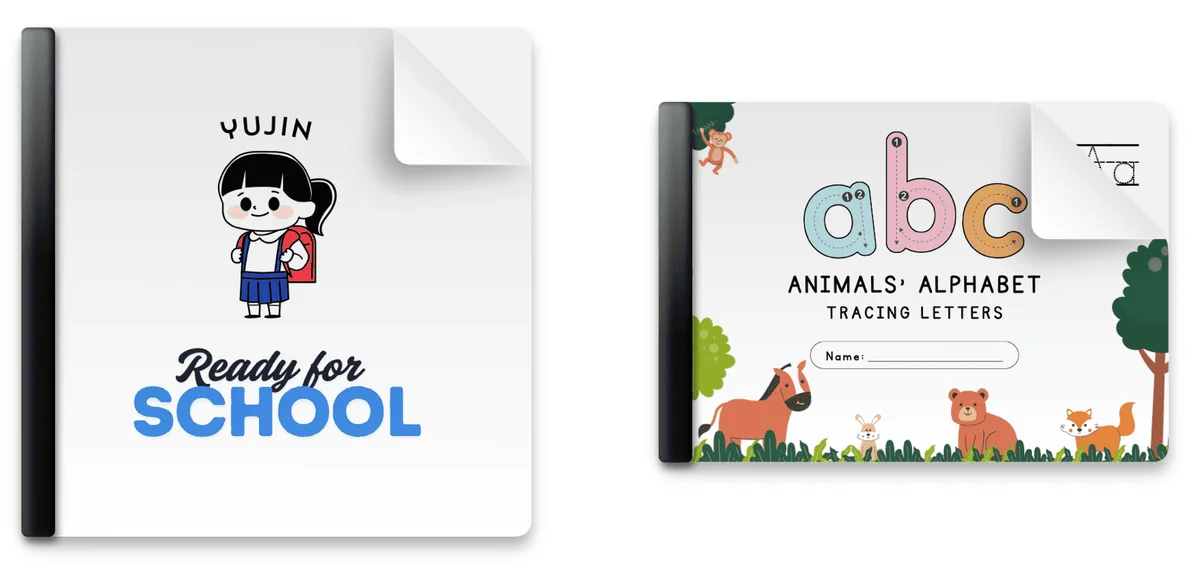
J will be using both Korean and English from a young age, so we're teaching both languages simultaneously. Korean is still her primary language while English is at vocabulary level, but she picks up both quickly without resistance. Since she's starting school soon, the goal isn't academics—it's adapting well to school life. She needs to practice doing things independently, sitting still and focusing, and understanding basic instructions.
Daily Tasks
Korean Korean workbook series, one lesson per day.
Writing Practicing alphabet and name writing with How to Write notebook.
Words Using Dad's word study app—listening to words and learning through games.
Ready for School Working through a small booklet I made, which covers alphabet, numbers, common school objects and facilities, and simple instructions.
Learning to Focus Various activities like creativity worksheets, origami, drawing and coloring, number blocks, tangrams.
Building Independence
The main reason for setting individual routines is to help each child develop habits of managing their own tasks and time. I won't always be home to oversee their studies, so the system needs to run smoothly with minimal supervision and support. February and March—while I still have time—will be a period of testing, revising, and establishing this system.